
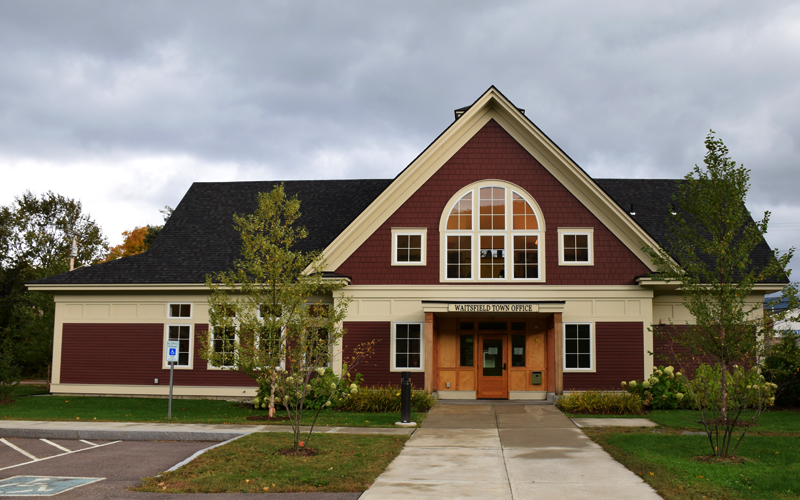
Waitsfield voters will be asked in November to approve a bond for a new town garage, with officials working through the next month to narrow a preliminary project estimate currently ranging from $4.5 million to $5.5 million.

Town administrator York Haverkamp said the select board expects to have a final bond amount ready for the warning by its Sept. 28 meeting. The town is moving quickly on the project, with construction targeted for spring 2027 if voters approve the bond.
The proposed garage will replace the town’s current facility and provide space designed around the equipment and demands of the road crew. The project also includes construction of a new salt shed, adding to the bond cost.
Haverkamp said the price range is deliberately broad because several pieces of the project are still being finalized.
COST BEING REFINED
The town has already completed substantial design work and recently brought in MH2, an architecture firm formed by two architects who previously worked at Bread Loaf, after Bread Loaf closed its doors. Haverkamp has paired the architects with Connor Construction as construction manager.
Rather than completing the entire design and then hiring a contractor to build the facility, Waitsfield is working with the construction manager during the design and planning process. Haverkamp said Connor Construction has extensive experience with municipal garages and has recently built or is building garages in East Montpelier, Milton, Georgia and Berlin.
The town received interest from five construction firms before narrowing the field and selecting Connor Construction. Haverkamp said the proposals were difficult to compare directly because the project’s final construction cost was not yet established.
The $4.5 million to $5.5 million range is an early planning figure, not a final bond request. Haverkamp said the town is working with the Vermont Bond Bank and bond attorneys to determine borrowing costs, loan length and annual debt service.
The town is also working to determine how much of that annual debt service will be covered by Local Option Tax revenue and how much would fall to property taxpayers. The Local Option Tax generates revenue from taxable rooms, meals, alcohol and retail sales.
Haverkamp said the town expects to have a clearer picture of the debt service by the end of September, once the preliminary project cost and financing terms are established.
The town is also investigating financing opportunities that could reduce the amount it needs to borrow. Haverkamp said he is looking into potential 0% financing for portions of the project, including battery backup and solar components, and plans to conduct a cost-benefit analysis and calculate the return on investment for individual elements of the project.
ENVIRONMENTAL TESTING
The proposed garage site is the location of the town’s existing garage, and officials are investigating whether past uses of the property will impact costs before construction begins. A Phase I environmental assessment was completed in the spring, and the town has moved into Phase II testing. Monitoring wells have been installed and samples have been taken for laboratory analysis, with additional sampling planned.
Haverkamp said the town also conducted test pits at the site to better understand soil conditions. A geotechnical investigation involving additional borings is expected in the coming weeks. The environmental work is intended to give the town a better understanding of what lies beneath the existing garage site and whether remediation will be necessary. Those findings could affect the final project cost.
THE FUTURE
The proposed facility is also being designed with changes in municipal road equipment in mind, including the eventual transition to electric vehicles. Haverkamp said the town does not necessarily need electric charging equipment in every garage bay immediately, but the building should be designed so electrical infrastructure can be added as the town’s fleet changes.
“We don’t need to put EV charging into every single bay of the garage, but the infrastructure needs to be in place so that in the future, it’s ready.”
The existing garage has limited room for the town’s equipment, requiring vehicles and machinery to be positioned with little space between them. Haverkamp said the new facility should improve efficiency and provide adequate room for the road crew to operate.
2027 CONSTRUCTION
If voters approve the bond in November, the town plans to begin construction in spring 2027 and complete the project during a single construction season.
Haverkamp said the town has been pursuing an aggressive schedule because construction costs for municipal garages have been increasing significantly from year to year. Moving ahead in 2027 rather than delaying another year could help limit additional costs, he said.