

Waitsfield’s municipal wastewater project is going out to bid next month. After five years of planning and engineering, the project, which will serve Waitsfield Village and Irasville, is shovel-ready. Inflation, increased materials and diesel costs have increased project costs of the project from $15 -16 million to $20 million. The town has received $6.5 million in grant funding with the possibility of another $3 million in Congressional Direct Spending, according to select board member and project spokesperson Chach Curtis.
Taking this project out to bid comes as the town is asking voters to approve a $5.95 million bond for a new town garage while planning for the replacement of the deteriorating Meadow Road bridge over the Mad River.
Together, the three infrastructure projects will cost more than $25 million, according to Curtis. The town’s annual budget is approximately $3 million. Waitsfield voters approved a one percent local option tax at Town Meeting in March. That is levied on rooms, meals, alcohol and retail sales and is expected to yield about $600,000 per year, which voters earmarked for infrastructure and capital projects.
OFFSET COSTS
“It’s also super exciting that we actually have the opportunity to get this stuff done with a mix of federal and state grants, low interest rate loans from the federal and state governments, and some LOT revenue to minimize the impact on taxpayers,” Curtis said.
The local option tax will help offset the cost, but Curtis said, but will not eliminate the impact on taxpayers. The town has approximately $6.5 million in grant funding and loan forgiveness to help pay for the wastewater project. The largest award is $3.5 million in American Rescue Plan Act funding from the state. The town also received $1 million through the Northern Borders Regional Commission and $650,000 from the U.S. Department of Agriculture’s Rural Development program.
Another $1 million is expected from the state’s Clean Water State Revolving Fund. The state previously provided about $400,000 for preliminary needs assessment work, the feasibility study and engineering. That funding allowed the town to advance the project withoutadding those preliminary expenses to the remaining construction financing.
Curtis said the town has designed the project to proceed whether or not that money comes through. Without it, Waitsfield would need to rely on low-interest loans.
2% LOANS
The town has access to long-term state and federal loans, including state financing with an interest rate of about 2%. Curtis said the loans can extend over 30 years, a period that better reflects the expected 50-year or longer life of the infrastructure. With the existing funding package, the town could be financing $13.5 million, although that number will change based on a Congressional Direct Spending award andhow the town uses LOT funding for this and other projects.
The wastewater bids come as the town prepares for a Nov. 3 bond vote on a new town garage and continues engineering work on Meadow Road Bridge. The projects address aging infrastructure and an urgency created by a changing climate, Curtis said.
Waitsfield’s existing private wastewater systems include leach fields vulnerable to flooding. When floodwaters compromise those systems, untreated or inadequately treated wastewater can enter the Mad River, creating public health concerns and threatening the river that supports The Valley's recreational economy.
The proposed system is intended to move vulnerable wastewater disposal away from those risks while creating capacity for future needs. Curtis described the project as critical to the community’s long-term sustainability.
SEVERE WEATHER
The new town garage will replace a deteriorating facility built in the 1970s that no longer meets the road crew’s needs. Its design incorporates measures intended to keep operations functioning during extended power outages, including planned battery backup to operate overhead doors.
Curtis said that resilience matters when flooding, ice storms or other severe weather leave roads damaged or impassable. Road crews need to be able to get out quickly to clear roads and maintain access for emergency vehicles, even when power is unavailable.
The Meadow Road Bridge is in poor condition and posted for an 8-ton weight limit. Its deterioration has been accelerated by storm damage and additional traffic in 2020, when the Route 100B bridge at the south end of Moretown Village was replaced. That 100B bridge was damaged during Tropical Storm Irene in 2011. Additional flooding in 2025 destroyed a Route 100 and another Route 100B bridge, which again rerouted traffic to Meadow Road bridge.
The bridge’s condition has worsened as Waitsfield works toward replacing it. Preliminary designs call for raising the bridge by roughly 2 to 3 feet to accommodate higher floodwaters and moving the abutments farther from the river to reduce the risk of damage during flooding.
NEXT STEPS
For the wastewater project, immediate next steps include securing easements from property owners whose land will be crossed by collection pipes and from residents and businesses connecting to the system.
The project will include four pump stations and is planned as a complete system rather than a phased installation, which officials believe will reduce construction costs and community disruption.
The initial disposal capacity is planned at 89,000 gallons per day. About 73% is earmarked for priority users, including properties where leach fields are in floodplains or overlap with nearby wells. The remaining 27% is planned for new residential and commercial development.
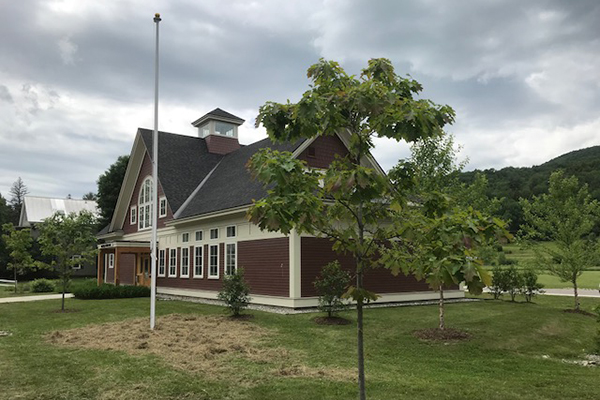
Construction will be bid in two parts: the treatment facility and leach field at Munn field, and the collection system running along Route 100 from the elementary school to the treatment site, including connections to individual properties. The treatment facility could be built more quickly than the extensive network of pipes and connections. Depending on contractors’ schedules and bids, work could begin earlier as early as this fall and continue in the spring.