
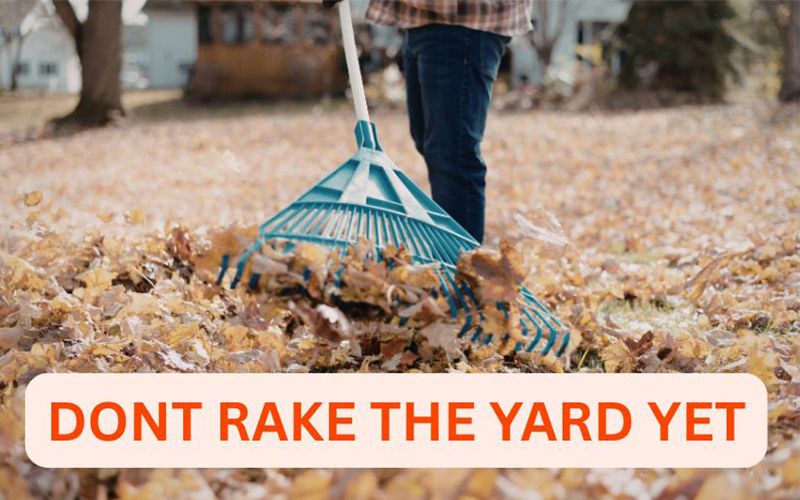
A couple of warm days and it’s hard to resist the urge to start raking the lawn and gardens which look particularly bedraggled along about now. But it’s probably still too early to dig in with rakes, according to local garden pro Jeannie Nicklas. In Vermont, April is generally too early to do a full, aggressive yard cleanup. That’s because pollinators and beneficial insects are hibernating in leaf litter and hollow stems.

“And you might as well encourage people to wait as long as they can to mow their lawns and when they do, keep the blades set at three to four inches,” she said.
Nicklas confirms that they need that extra time. People should wait until temperatures are consistently above 50°F during the day for about a week or two, which usually happens in late April to mid-May.
Here are some basic guidelines:
- Wait for consistent weather—nighttime temperatures in the 50s are ideal, but wait until daytime temperatures are consistently in the 50s.
- Don't clean up until queen bees and other pollinators out, or after early trees have finished blooming.
- Cutting back dead plant material and raking leaves too early can kill or throw away beneficial insects (ladybugs, luna moths, bees) that are still dormant in that material.
- If people are worried about tick habitats, leaves can be cleared from high-traffic lawn areas but leave them in garden beds.
- Many native pollinators rely on hollow stems and leaf litter to hibernate. They won't fully wake up and move out until consistent warm weather arrives.
- Frogs, salamanders, snakes, toads, and beneficial bugs (like larvae of fireflies) live under the leaf debris over winter. Cleaning too early destroys their habitat.
- To be safe, wait to cut back dead, brown plant stalks. This allows stem-nesting bees to emerge.