
Fayston kicks off its multi-year effort to update its Town Plan, with officials inviting residents to weigh in early as discussions begin on a chapter that could shape future development, conservation and flood resilience decisions.

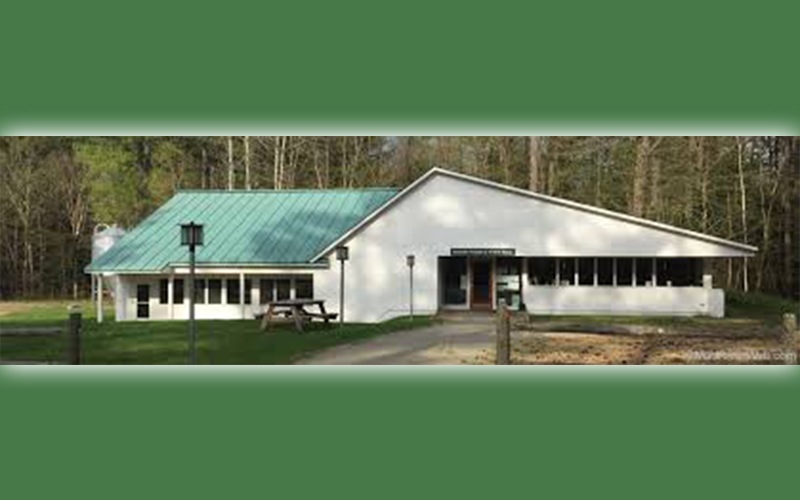
The Fayston Planning Commission will hold its first public meeting Monday, May 11, at 5:30 p.m. at Town Hall, where members will begin reviewing Chapter 3 of the current plan — a section focused on natural resources, ecology and environmental policy.
Planning commissioner Andrew McNealus said the chapter is a logical starting point, given recent events and policy changes that have brought environmental concerns to the forefront.
“Just broadly, it’s all about the ecology and the natural environment,” McNealus said. “And one thing — the main reason it’s important — is that the Town Plan guides local decision-making.”
ACT 250
Town plans, while not regulatory documents themselves, serve as a foundation for zoning bylaws, subdivision regulations and development review. They are also used in state-level permitting processes, including Act 250.
“If somebody has an Act 250 permit going through, the review board could look to our Town Plan to help make their determination,” McNealus said. “And our Development Review Board will do the same.”
That role is expected to grow in significance as new legislation expands the scope of projects subject to state review. Act 181, recently enacted, increases the number of properties that may require Act 250 permits — meaning Fayston’s Town Plan could be referenced more frequently in development decisions.
“Anything we put in Chapter 3, what we reference, becomes more important,” McNealus said. “If Act 181 triggers more Act 250 permits for Fayston residents, this document will be referenced more often.”
FLOODING
The chapter is also being revisited in the wake of recent flooding events across Vermont, which have raised new questions about how communities manage wetlands, floodplains and river corridors. At the same time, the state’s Flood Safety Act — known as Act 121 — is introducing new standards aimed at reducing flood risk.
Those changes present a key question for Fayston residents: whether local regulations should go beyond state requirements.
“It’s a big topic for Fayston, for sure,” McNealus said. “That’s for people to consider — whether they think the state is doing enough, or if it’s doing too much.”
HOUSING
The Planning Commission is seeking public input on that issue, as well as broader questions about how the town balances environmental protection with other priorities.
Among the most pressing is housing.
Like many Vermont communities, Fayston is facing a shortage of available homes, creating tension between conservation goals and the need for new development. McNealus said Chapter 3 is a critical place to have that conversation, even though it has not always been framed that way in the past.
“That’s a big, broad question — how we balance the environment, conservation and our housing needs,” he said. “Historically, this chapter has been looked at somewhat in a vacuum.”
He noted that public opinion can shift depending on how the issue is framed.
CONSERVE, PRESERVE
“If you ask the public, ‘Should we preserve and conserve and have all these regulations to save our environment?’ the answer is yes,” McNealus said. “But if you ask, ‘Should we do all those things and limit our housing supply?’ that gets more complicated.”
The Town Plan update offers an opportunity to address those competing priorities more directly, and to reflect current community sentiment.
“If people feel really strongly that Act 181 is going too far, updating this chapter to reflect that could be one way to create local regulations that more accurately reflect local sentiment,” he said.
McNealus emphasized that local control has limits. State law supersedes municipal policy, meaning Fayston cannot adopt regulations that are less stringent than state requirements.
CHAPTER 3
Chapter 3 of the current Town Plan outlines policies related to water resources, forest and wildlife habitat, agricultural land, and scenic and natural areas. It also addresses issues such as erosion control, stormwater management and protection of river corridors — all areas that have taken on renewed urgency in recent years.
The broader Town Plan update is expected to take several years and will include multiple opportunities for public input. Officials say the process is intended to be community-driven, with each chapter revisited and revised over time.
“This is one of many opportunities,” McNealus said. “The Town Plan is pretty broad. It affects almost every part of the community.”
Starting with Chapter 3, he added, allows the commission to tackle issues that are both timely and foundational to the town’s future.
“We’re starting here because it’s more relevant right now,” McNealus said, pointing to recent flooding and new state legislation. “It’s a good place to begin the conversation.”
For residents, the upcoming meeting marks a chance to help shape that conversation from the outset — and to influence a document that will guide Fayston’s growth and conservation efforts for years to come.