
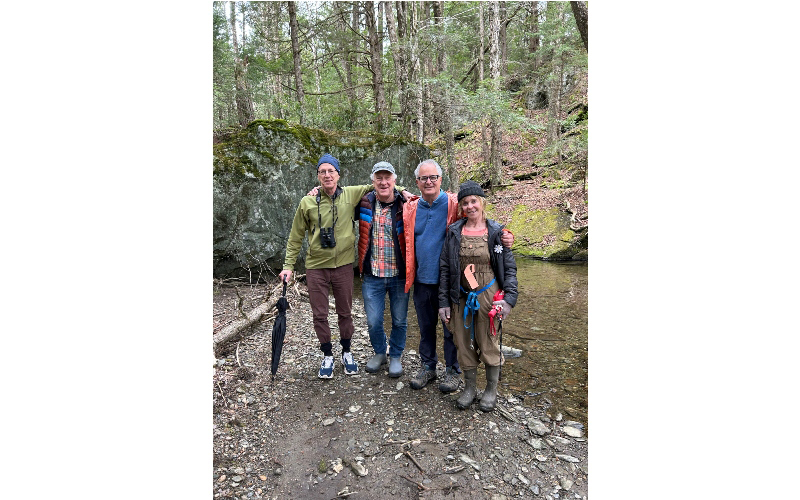
A key parcel of land in one of Vermont’s most important wildlife corridors has been permanently protected, the Vermont Land Trust (VLT) announced today. Siblings David, Marc, Nella and Paul Wennberg conserved their 227-acre forestland with the land trust on June 5.

The Waterbury property sits at the heart of the Shutesville Hill Wildlife Corridor, which spans thousands of acres of forest and has been identified by the Vermont Fish & Wildlife Department as one of the state’s top 10 priority corridors. Protecting the land will help keep pathways open for wildlife amid growing pressure on forests.
“This land has always held special meaning for the Ottolenghi-Wennberg family,” said David Wennberg on behalf of the family. “Since we bought the property with our Waterbury Center friends and neighbors in the 1970s, we have considered this place one where we are guests of the animals and flora that were there long before us. When the Vermont Land Trust approached us about preserving it as a critical piece of the wildlife corridor, we were very excited. With the conservation easement transferred this month, we feel the land is now where it was always destined to be.”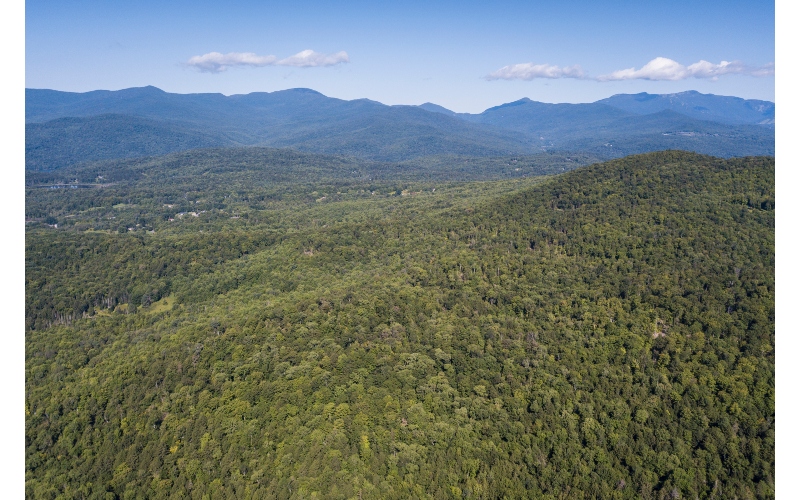 _
_
The project marks a milestone in a multiyear partnership effort to protect the corridor, bringing the total conserved area to 1,200 acres, or more than 25% of the priority area. It adds to a network of protected lands that provide space for wildlife and plant species shifting northward as they adapt to a changing climate.
“This is a really critical stretch of forestland and wildlife habitat right in the center of the corridor,” said Bob Heiser, project director for Vermont Land Trust. “We are grateful to the Wennberg family for ensuring that this critical link in the landscape remains connected and for joining other rural landowners in the region who have conserved their lands for the benefit of wildlife.”
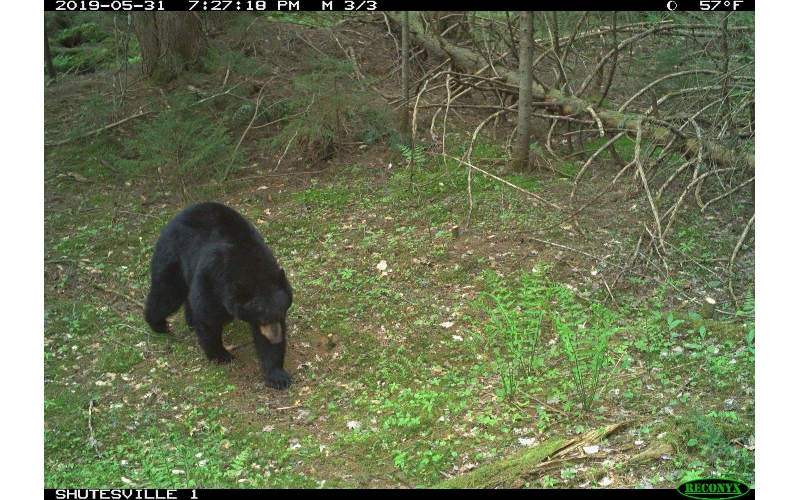
The Shutesville Hill Wildlife Corridor is the only viable connection in the area for wildlife moving between two vast stretches of forest that together provide more than 85,000 acres of intact habitat, especially for wide-ranging species such as bears and bobcats.
“Shutesville Hill Wildlife Corridor is regionally significant because it allows east-west movement between the main spine of the Green Mountains and the Worcester Range,” said Jens Hawkins-Hilke, conservation planning biologist with Vermont Fish & Wildlife. “This is important not only for regular movement of animals to meet their daily and seasonal needs, but also in the context of climate resilience, allowing entire populations to adjust their home ranges in the face of a changing climate.”
MULTIYEAR PARTNERSHIP
With increasing pressure to convert forestland to other uses, preserving wildlife habitat in the corridor has been a conservation priority for nearly 15 years.
The Shutesville Hill Wildlife Corridor partnership — made up of towns, conservation organizations and state agencies — has worked to protect this threatened connection essential to wildlife and landscape resilience amid climate change.
FORESTS, WETLANDS AND STREAMS
The Wennberg land is the seventh parcel protected by the partnership and had long been identified as a priority. After VLT and the landowners began discussing conservation, VLT assessed the property and sought conservation funding because of its strategic importance. The organization will continue monitoring the parcel and support current and future landowners in managing it.
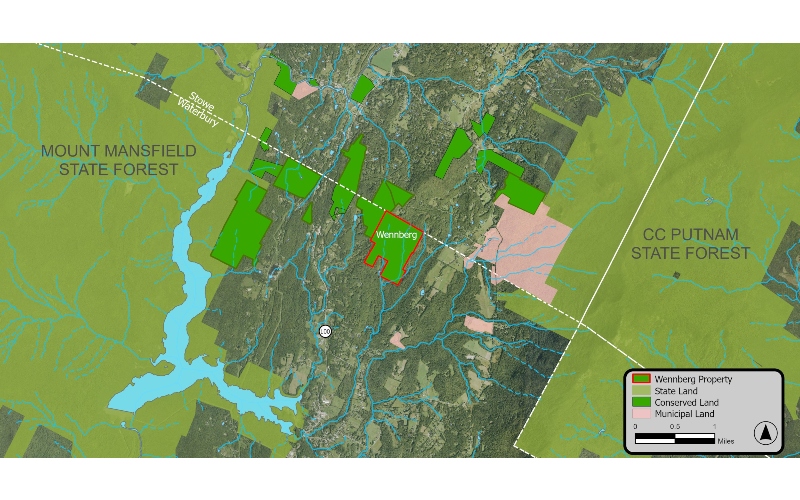
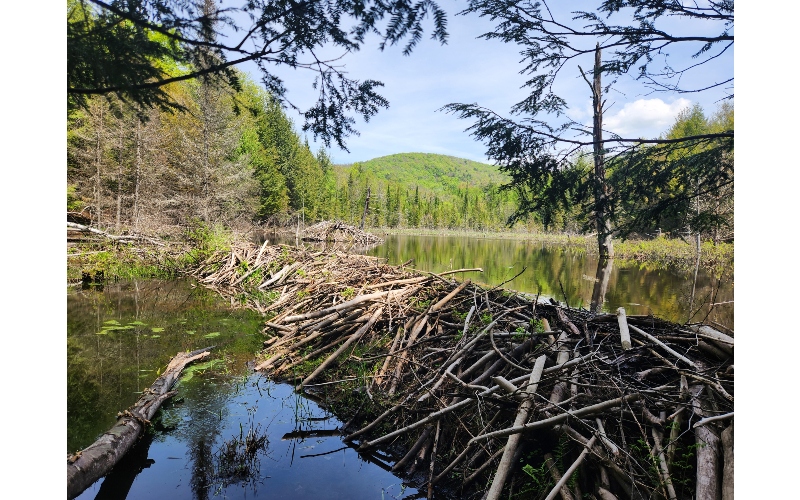
Located along the Stowe boundary on the flanks of North Hill, the parcel includes a vernal pool, miles of headwater streams and about five acres of wetlands, including an active beaver-influenced pond and wetland complex and an uncommon forested swamp.
The Wennberg family sold the conservation easement for less than its appraised value. Conservation runs in the family: the siblings’ late mother, Emma Ottolenghi, conserved 50 acres nearby in 2007.
At the time, Emma said: “I’m doing this for my great-great-great-grandchildren, and for Vermont.”
This project was funded by the Vermont Housing & Conservation Board, The Nature Conservancy’s Vermont Biodiversity Protection Fund and individual donors.
“We’re grateful to the Wennberg family for helping conserve land that is so important to wildlife, forest health and the long-term resilience of this landscape,” said Gus Seelig, executive director of the Vermont Housing & Conservation Board.
“This conservation project protects a strategically important section of one of Vermont’s highest-priority wildlife corridors. By keeping these forestlands connected, landowners and partners are helping support biodiversity, strengthen climate resilience and ensure future generations continue to benefit from healthy, working natural landscapes.”
“The success of the Shutesville Hill Wildlife Corridor partnership demonstrates what can be accomplished when landowners and conservation partners collaborate to protect Vermont’s natural areas,” said Gannon Osborn, director of resilient and connected lands at The Nature Conservancy in Vermont. “The Nature Conservancy in Vermont greatly appreciates Vermont Land Trust’s work in this critical corridor and the opportunity to support this conservation project.”
Photos
- Aerial view of the Shutesville Hill Wildlife Corridor in Waterbury with the latest protected land in the center. Credit David Middleton
- Beaver pond on the Waterbury land protected by the Wennberg family
- Photo of bear in the wildlife corridor captured on wildlife camera in 2019
- Map showing protected land in the Shutesville Hill Wildlife Corridor in Waterbury and Stowe