
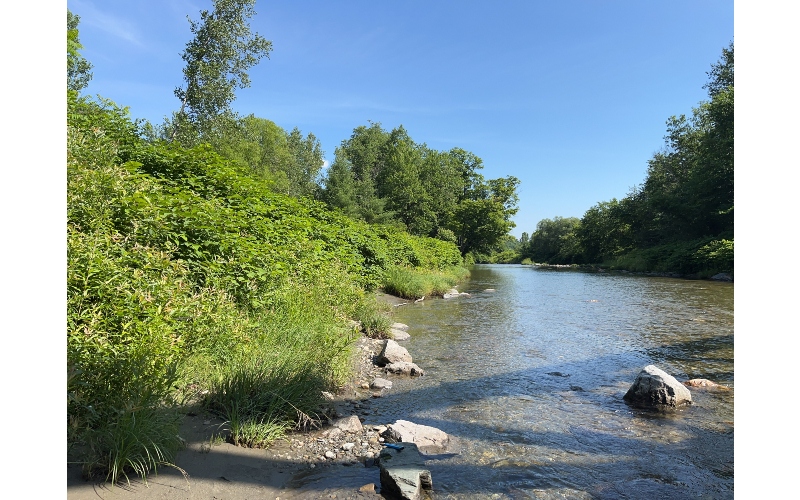
Over the weekend, Friends of the Mad River’s water quality volunteers sampled and monitored the Mad River. They weren’t the only ones enjoying their time in the river, as the holiday weekend, alongside last week’s heat wave and humidity, meant that the river has been particularly heavily trafficked this past week. How does recreation intersect with river health? How can we recreate responsibly in our river and what lessons have we learned about sustainable river recreation from Friends of the Mad River’s 40 years of water quality monitoring? This article is part of an ongoing series that shares highlights from this field work of Friends of the Mad River’s Mad River Watch program.

“The relationship between river health and recreation is twofold: humans depend on clean and cold water for our enjoyment (swimming, paddling, etc.), and the river depends on our attention and care in the way in which we engage in those activities, so that it can maintain those high-quality conditions,” explained Rohan Press, watershed engagement coordinator for Friends of the Mad River.
“A river is not just the water that flows through a delineated channel. It is a system of connectivity. It is the water, the riparian buffer around it, and the tributaries feeding it. Without all of these things, the river as we know it couldn’t exist. And so, from that perspective, taken loosely, the Mad River is indistinguishable from its watershed, because that entire watershed, from Scragg to Stark Mountain, affects and is affected by it,” he added.
“What this means is that, when recreating in the river, it is important to respect one’s environs as a form of respect for the river itself,” Press continued. “For example, trampling on native vegetation to access the water has a direct effect on the river’s health. It makes the river more vulnerable to erosion, which threatens its quality and habitat—both for wildlife and, recreationally, for people.” The riparian corridor (the strip of vegetation immediately lining the river) is among the most important and most fragile parts of our ecosystem. It is important to minimize human impact in these zones, not only to help mitigate erosion, but also to help slow the spread of invasive species, like Japanese Knotweed, which thrive and take over in the face of disturbance. Moreover, a healthy riparian buffer provides shade for the river and therefore helps to keep water temperatures low. Not only is this of vital importance for many cold-water-loving species like brook trout, it is also desirable for its recreational value—the relief that it provides us on warm days,” he pointed out.
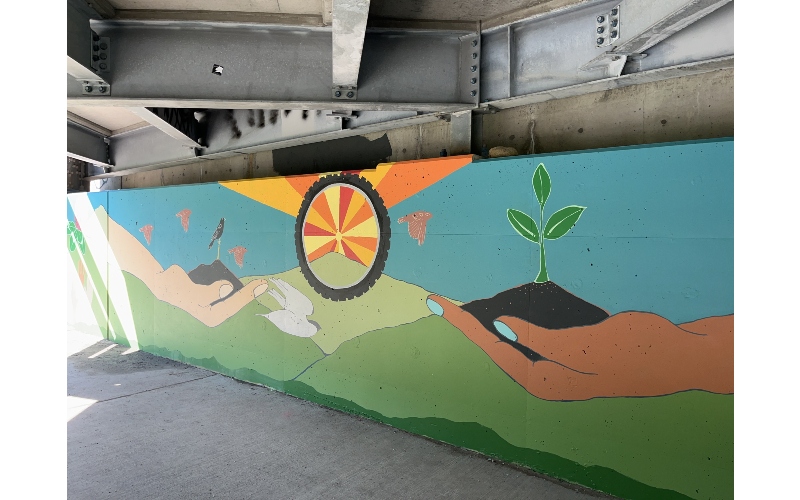
Summer recreation is a huge part of what makes the Mad River Valley a desirable and special place. As people engage and recreate, it’s important to remember that everyone’s actions, even far upstream from the main stem of the Mad River, have an effect on the river. Cutting corners on a switch-backed hiking trail might loosen the soil and lead to a landslide, which could contaminate the river. Overharvesting fish can degrade the aquatic food web and lead to nutrient imbalances. “The river, and this watershed, are not just ‘there’ to be used and enjoyed,” Press continued. “The river is an unfolding and tenuous ecological process in which we necessarily participate. And while we should continue to enjoy swimming, hiking, fishing, hunting, biking, and everything else, we should understand that those activities are always done within a malleable system that we are asked to respect.”
“Enjoying the river is an invitation for us to participate in a broader pattern of attention and stewardship. It’s not a question of deliberately choosing to be a steward of the Mad River. The fact is, you already are; everything you do already affects this river and this landscape. So it simply comes down to what level of thoughtfulness you’re willing to bring to the situation you’re already in.”
Notes from the Field
This week, volunteers noticed higher-than-usual water temperatures, as well as particularly high conductivity, or sediment runoff. Heavy rain in Warren on the 4th of July affected river flow and conductivity on Saturday, with conductivity levels reading about 130 microsiemens per centimeter in lower Waitsfield and Moretown (Pony Farm Road and Meadow Road)—the highest values recorded all year. These high sediment levels persisted into Sunday, with numbers as high as 71 even upstream at the Warren Covered Bridge.
“Hopefully, the more moderate temperatures this upcoming week will help the river to flush out all that sediment and regain equilibrium,” Press said.
Also of note this week is that a Mad River Watch volunteer, Jenn Grant, has successfully petitioned VTrans (after five years of trying) to clean up the overgrown stairway at the Ward Access site in Moretown. VTrans worked on the site this week. Thank you, Jenn!