
I’m a Yankee Doodle Dandy. (A real live nephew of my Uncle Sam.) Born on the Fourth of July, and in the nation’s capital no less. This should make me, by birthright, a true patriot. But as a Dandy whose childhood birthday cakes were often adorned with stinky sparklers and American flags, I’m inclined to question just what being a patriot really means.

There is the dictionary definition of “patriot”: “a person who vigorously supports their country.” But support is a vague concept. Is blowing off fireworks on the Fourth of July an expression of patriotic support? How about participating in a parade? Is chanting “U-S-A” at sporting events a sign of patriotism? Is red, white, and blue clothing the garb of a patriot?
Such stuff strikes me as patriotic surface-scratching, much of it done mostly for fun. That’s OK, as far as it goes, but it falls short of the gravitas of true support of the fundamental principles that are the bedrock of the country. Patriotism too often gets shortchanged behind a façade of symbolism or, in the case of the U-S-A chants, devalued by the tinge of jingoism. Dressing in red, white, and blue doesn’t automatically make one a patriot any more than wearing a coat and tie automatically signifies a successful businessperson. What are, or should be, some of the true touchstones of patriotism?
Voting is a good place to start. Implicit in “of the people, by the people, for the people” – Lincoln’s famous words in the Gettysburg Address – is that voting is the foundational building block of an enduring democracy.
A THIRD DON’T VOTE
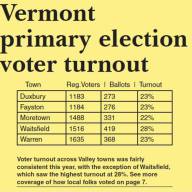
Yet more than a third of Americans who are eligible to vote don’t make the effort. (That puts the U.S. voter turnout rate slightly below the average for other leading democracies, according to the Office of Economic Cooperation and Development.) Some reasons for not voting are no doubt justifiable – illness, lack of transportation to the polls, parenting obligations, perhaps as an expression of protest. But the guess here is that most non-voters don’t show up at the polls as a matter of apathy. They just don’t care or can’t be bothered. They thus fail to qualify as patriots on the most rudimentary level, even if they wave flags zealously and chant U-S-A at soccer games.
Understanding, appreciating, and believing in the constitutional fundamentals of how the U.S. government and economy work might be another measure of patriotism. Yet a recent survey by the U.S. Chamber of Commerce Foundation found that 58 percent of Americans fail a basic civics test. One can imagine an anti-immigrant knucklehead like Stephen Miller suggesting that this is because a flood of foreign-born immigrants in the U.S. dilutes the percentage of civics-aware Americans. Yet 90 percent of naturalized immigrants can pass a comparable civics test, largely because it is required in the naturalization process.
A patriot is someone with an objective and sober perspective on both the country’s strengths and weaknesses, past and present. As nations go historically, the U.S. has repeatedly been praiseworthy, in war and in peace, in good times and in bad, in economic vitality and in creative and technological ingenuity. There is ample reason to celebrate the success and durability of the American experiment on the Fourth of July. But failure to acknowledge some of America’s historical and current shortcomings is not just willful ignorance, it is a failure to accept one’s duty as a responsible, and patriotic, citizen. Criticism and dissent are like vitamins that nurture a healthy democracy. This is a concept that seems lost on right-wingers who so often accuse liberals of hating America because they sometimes draw attention to the country’s current and historical missteps.
WAYS TO CONTRIBUTE
Service to the country, or for the betterment of the country, is a profound expression of patriotism. “Ask not what your country can do for you – as what you can do for your country,” the famous words of John F. Kennedy in his 1961 inauguration speech, is one of the great declarations of patriotism in American history. And the meaning of “what you can do for your country” or “service” isn’t just a military call to arms, although it can be. Teachers, firefighters, diplomats, religious leaders, volunteers of all sorts – there are many who, in different ways, contribute to making America a better country. Many do so namelessly, often for modest compensation or none, with the reward being that they are making America a healthier, safer, more functional, and more robust environment for all of us to live in.
The British writer Samuel Johnson once called patriotism “the last refuge of a scoundrel.” In other words, patriotism can be abused as a pretext for behaving unethically. The storming of the U.S. Capitol on January 6th by self-anointed “patriots” was Johnson’s proclamation set in motion. But January 6th was obviously a contortion of any concept of patriotism. I’d like to think that I am a patriot not simply because of my patriotic birthday but because of my patriotic faith in the principles of American democracy: freedom, justice, liberty, equality.
And I vote.
Oliver lives in Warren.