
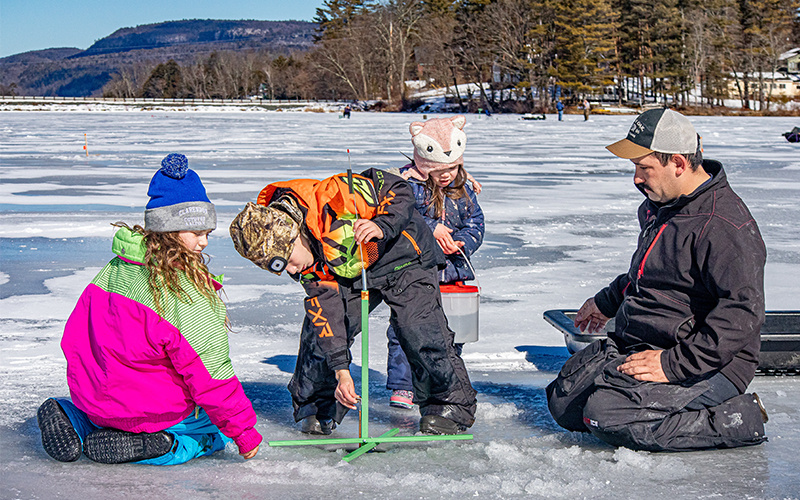
Ice fishing got an early start this winter with the cold weather that began in December which has resulted in more days to safely enjoy this fun and accessible winter activity.

“Ice fishing is generally more accessible than open water fishing,” says Shawn Good, a fisheries biologist with the Vermont Fish and Wildlife Department. “All you need to do is walk out onto a frozen lake or pond with some simple gear, drill a few holes in the ice, and enjoy being outside with friends and family while you wait for the fish to bite.”
Ice conditions can be variable across Vermont, so anglers should use good judgement, know how to read the ice and test it often, and check with a local outdoor store or other anglers about area conditions when deciding where to fish. Anglers should always bring a spud bar to test the ice and a set of wearable ice picks for self-rescue, and let someone know where they are going and when they plan to be back.
“Three to four inches of clear black ice is the minimum for safe ice fishing,” said Good. “For the kind of cloudy gray ice we get after cycles of freezing, thawing, and re-freezing, we recommend anglers look for at least six inches of ice where they plan to fish.”
Perhaps most important for both safety and fun Good recommends always going ice fishing with a buddy, or a whole group of friends.
“For many people, ice fishing is as much about being together with friends and relatives as it is about the fish,” said Good. “I’ve seen families out on the ice with grills, food and hot drinks having a great time. They set their tip-ups, build snowmen and even skate and play pond hockey between bouts of fishing.”
To learn more about ice fishing techniques, safety and places to fish visit the Vermont Fish and Wildlife Department’s “Ice Fishing Basics” and “Ice Fishing Opportunities” webpages. For those new to the sport, the department’s “Let’s Go Fishing Workshops” offer opportunities to enjoy ice fishing with an experienced teacher and other new anglers all winter long.
You might also like