
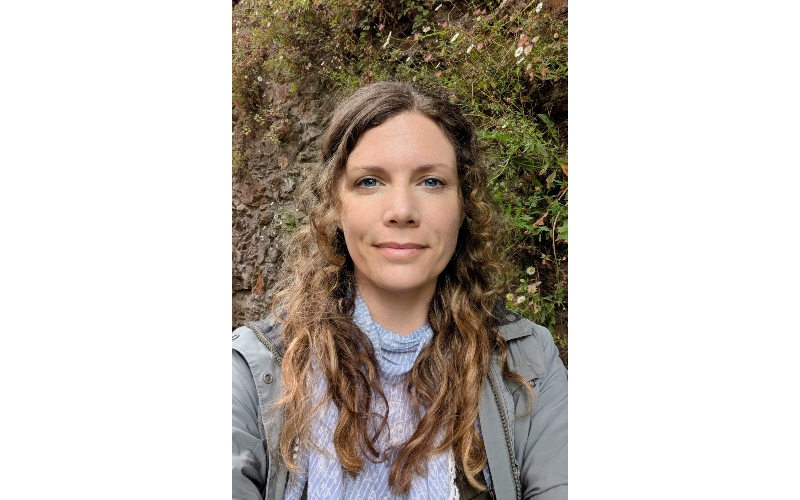
Friends of the Mad River welcomes Michelle Krieg as restoration nursery coordinator. This position will entail launching Friends of the Mad River's new restoration nursery, collecting source plant material and growing native plants, leading nursery-related workshops and events, supporting ecological restoration projects, coordinating volunteers, collaborating with local partners, landowners, and land managers, and contributing to the long-range planning required to ensure the nursery is an asset for years to come.

Although most of Krieg's work has been in the Western US, she also spent four years over the last decade in a small village along the River Dart in England, studying ecological horticulture and participating in various land-based projects and initiatives—including tree planting through traditional and Miyawaki methods, and regularly volunteering with a native plant nursery that grows bare-root trees for woodland restoration projects. Her time immersed in the rural countryside, temperate forests, and hiking along the numerous meandering rivers and streams in England was deeply nourishing, and led her to want to cultivate a similar rural lifestyle in a place that shares its same essence—Vermont.
She is excited to join the Friends of the Mad River team as a means to not only create healthy landscapes and rivers, but to also cultivate relationships and a culture of care and stewardship. She looks forward to exploring the local trails, swimming in the river, and letting her roots grow in the Mad River Watershed.
Krieg grew up in Wisconsin, surrounded by farmland, prairies, and forests spotted with glacier-formed lakes. For the past 20 years she has worked as an ecologist and horticulturalist, exploring how humans engage with the landscapes and how people can be stewards of place and the bioregional communities to which they belong.
She has managed and supported several native plant nurseries with state and federal parks, environmental education centers, and community nonprofits—stewarding riparian, forest, marshland, and meadow habitats through community-centered practice. With a graduate degree in land and craft-based education, she also has extensive experience leading students, interns, and volunteers in plant propagation and land stewardship projects. Throughout her career she has approached horticulture not simply as the making of a product, but as a window into the nature of life—through which people can not only cultivate relational diversity, but bring dependency back into their understanding of themselves. She believes that through the cultivation and stewardship of landscapes, people also cultivate their sense of place and ecological identity—reminding them what it means to be whole, and to be human.