
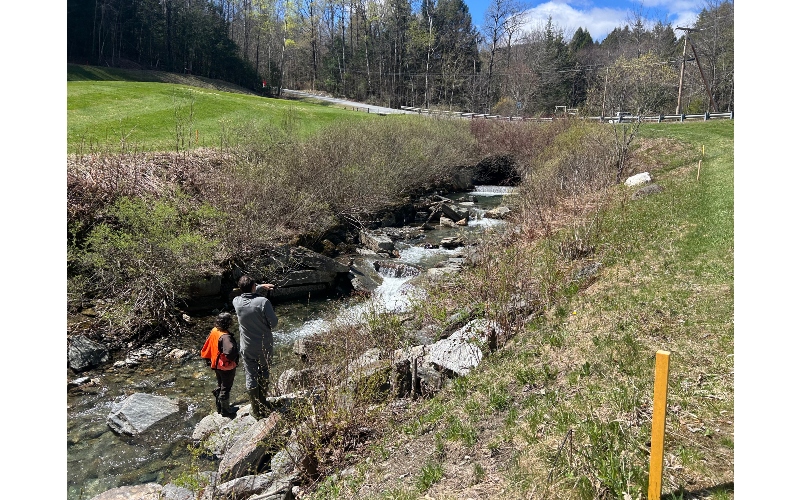
Friends of the Mad River has been awarded a $39,580 grant to support the next two years of watershed project development, extending work launched under an earlier round of funding that concluded last month.

The funding is from the Vermont Department of Environmental Conservation’s Enhancement Development Block Grant program and administered by Watersheds United Vermont. The award builds on a previous $25,000 grant that funded staff time from July 2025 through June 2026 and allowed the organization to explore and plan watershed improvement projects.
For Friends of the Mad River, the funding represents continued investment in the essential early stages of conservation work — identifying opportunities, building partnerships and moving ideas from concept to construction. Friends of the Mad River has long worked to improve river health and strengthen community resilience to flooding. That work is increasingly important due to pressures from climate change.
Many opportunities to improve water quality, restore wildlife habitat and protect roads, homes and public infrastructure require years of planning before construction can begin.
“Project development is critical to identifying and prioritizing projects that will improve the health of our watershed,” said Ira Shadis, executive director of Friends of the Mad River. “Friends of the Mad River is committed to doing this work in a way that addresses multiple priorities, such as supporting wildlife habitat and improving flood resilience for our villages.”
“With our watershed project coordinator, Julie Frost, on board now for a year, we are able to show up as a consistent partner that can manage projects that sometimes take years to go from first conversations to final construction,” he said.
Over the past year, the DEC and Watersheds United Vermont grant has supported project identification and evaluation across the watershed.
Friends of the Mad River began by reviewing more than a decade of studies, plans and assessments completed by both the organization and the watershed’s five towns. Those documents identified potential road projects, areas vulnerable to erosion, stream reaches in need of restoration and locations where additional protection could provide long-term environmental and community benefits.
Staff cataloged and evaluated potential projects and worked directly with municipal and private landowners to move selected efforts toward design and implementation. The new funding will allow that work to continue.
Through presentations to select boards across the Mad River Valley between January and April, Friends of the Mad River also expanded municipal collaboration and helped align priorities for future restoration efforts.
Rebecca Campbell, Warren town administrator, said the partnership has helped move important work forward.
“The Mad River is one of our community’s greatest assets, and Friends of the Mad River has been a fantastic partner in helping us protect and care for it,” Campbell said. “Their dedication and expertise have helped advance important projects and ensure that the river remains a healthy and vibrant resource for generations to come.”
Private landowners remain another critical part of the organization’s approach.
More than 80% of Vermont land is privately owned, creating opportunities for conservation and restoration efforts to happen directly on working and residential landscapes.
Don Wexler, a Moretown landowner who has partnered with Friends of the Mad River on multiple projects, said the organization’s technical support and long-term engagement have helped make stewardship efforts possible.
“Friends of the Mad River has been a dedicated and consistent partner over the years, always bringing technical expertise along with thoughtful community engagement,” Wexler said. “For a private landowner like myself, knowing I have them as a partner to help steward my land — including understanding how to fund and implement projects — has been a game changer. Watching and talking to the trees as they grow and thinking about the forest to come is truly amazing.”
Future areas of focus include increased collaboration with agricultural operations and ski resorts.
Julie Frost, watershed project coordinator, said the grant has allowed the organization to establish momentum and build long-term capacity.
“My role at Friends of the Mad River over the past year has been incredibly exciting and rewarding, and I could not have done it without this funding from DEC and Watersheds United Vermont,” Frost said. “From working with town select boards to identify priority projects to partnering with experts to evaluate the risks and benefits of complex watershed restoration, we have really moved the needle on building a pipeline of projects that we will pursue for years to come.”
Friends of the Mad River said community participation remains central to the success of its work.
The organization provides no-cost consultations to landowners interested in managing stormwater, improving stream stewardship and implementing restoration projects. State funding is also available to support some recommended improvements, including native tree and vegetation planting and drainage corrections.
Additional opportunities to get involved include biweekly water quality monitoring through the Mad River Watch program, invasive plant removal efforts and native seed collection for the organization’s newly launched Mad River Restoration Nursery.
More information is available at friendsofthemadriver.org or by contacting Julie Frost at