
A documentary examining the growing fight over access to books, libraries and intellectual freedom has received national recognition, but its filmmakers say the work is far from finished.

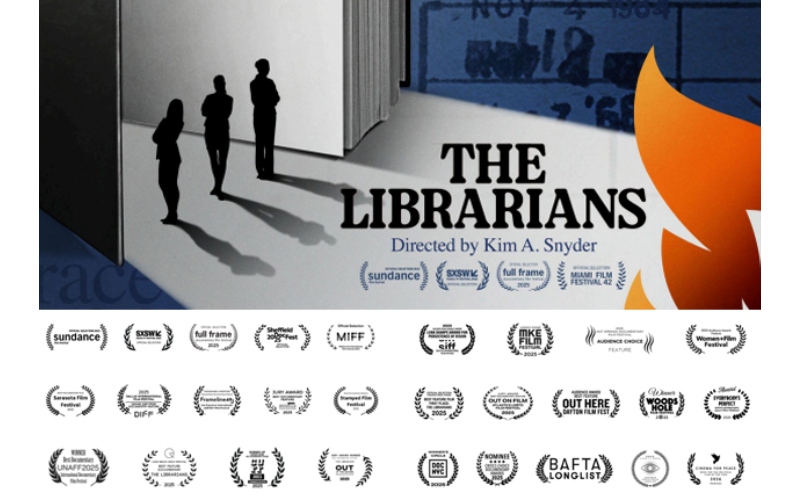
“The Librarians,” produced by Mad River Valley native Janique Robillard and her filmmaking team, has been nominated for an Emmy Award for exceptional merit in documentary filmmaking. The film follows librarians and communities across the country as they navigate challenges to books, censorship efforts and debates over who gets to decide what information belongs in public institutions.
The Emmy nomination comes as Robillard and her team continue a nationwide impact campaign built around screenings, conversations and encouraging residents to engage in local decision-making.
RAISING AWARENESS
For Robillard, who grew up in the Mad River Valley, the recognition offers an opportunity to continue raising awareness about what she describes as a critical First Amendment issue increasingly being decided at the local level.
“The work of the librarians themselves keeps getting out there, and community members are really tapped into what they can do,” Robillard said.
Since its release, “The Librarians” has been screened in communities across the country, including libraries, schools, universities and community venues. Local showings were sold out. Robillard said the conversations sparked by the film have reinforced that challenges to books are not limited to one region or one type of community.
“It’s not a southern problem. It’s not an over-there problem,” she said. “It’s something we really all need to actively participate in defending.”
THE BEST JOB
The film features Martha Hickson, a retired New Jersey high school librarian whose experience with book challenges became one of the central stories in the documentary.
Hickson began her career as a librarian in 2005 after leaving a job in corporate public relations at AT&T. She spent 20 years working with students and said it was one of the most rewarding chapters of her professional life.
“I can honestly say, for the bulk of those 20 years, it was the best job I ever had,” Hickson said. “I just loved, loved, loved working with those kids.”
That changed in 2021, when books in her school library became the focus of community challenges. Hickson said critics objected to books that included LGBTQ+ experiences and information related to sex education for teenagers.
She said the controversy quickly moved beyond questions about individual books and became a personal attack.
“They attacked not only the books, but me,” Hickson said.
GROOMER
At public meetings, Hickson said she was accused of being a “pornographer,” “pedophile” and “groomer of children” because of the materials available to students. She said school administrators did not publicly support her during the controversy, leaving her isolated as the dispute continued.
The experience, she said, began in September 2021 and continued until she retired in 2024.
But Hickson also found support from students and community members who pushed back against efforts to remove books. She said students who spoke at school board meetings were among the strongest advocates.
“If there’s a silver lining in any of this, it’s those kids,” Hickson said. “They were the voice that was persuasive in all of this.”
Hickson said an earlier fight over the graphic novel “Fun Home” by Alison Bechdel helped her build relationships with community members who later supported her during the larger book challenge effort.
THE TEST CASE
After retiring, Hickson continued working with Robillard and the film team through the documentary’s impact campaign, traveling to screenings and speaking with audiences about intellectual freedom and the role of librarians.
Robillard said the film’s release has coincided with continued challenges involving not only school libraries, but public libraries and higher education institutions as well.
“School libraries were just the test case,” Hickson said. “When that worked, (book challengers) began attacking public libraries, classrooms and higher education.”
Public libraries, she said, are increasingly part of the conversation because many are governed locally through library boards and municipal officials who influence budgets and policies.
Robillard said that local structure makes civic engagement especially important.
“Freedom to read is being decided by school boards, library boards, city councils and county commissioners across the country,” she said.
LIBRARY BOARDS
The filmmakers are encouraging residents to pay attention to local elections, including nonpartisan races for school boards and library boards.
Robillard said those positions often receive far less voter attention than statewide or national races, despite their direct influence on schools and libraries.
“We really want to see that go up,” she said.
The documentary’s impact campaign has connected Robillard and Hickson with librarians, educators and community members nationwide. Robillard said the team has worked with organizations including PEN America, Penguin Random House, Every Library and the American Library Association to support conversations about intellectual freedom.
The response from librarians has been particularly meaningful, Hickson said.
“Having this film out there lets them know they’re not alone,” she said. “There has been a tremendous amount of fear.”
WHAT CAN THEY DO?
Robillard said screenings often leave audiences asking what they can do next.
At recent events, including a Vermont screening in Waitsfield, audience members have shared their own experiences and concerns about access to books in their communities.
For Hickson, the Mad River Valley screening held a special connection. She and her husband spent years visiting Vermont and made the Round Barn Inn in Waitsfield a home base while exploring the state.
The Emmy winner will be announced Sept. 6 in Los Angeles. Regardless of the outcome, Robillard said the nomination represents an opportunity to continue conversations about libraries, civic engagement and First Amendment rights.
“The First Amendment is critical,” she said. “There’s not a good time to walk away from this when we see that we are able to spark these conversations and inspire more people to get involved.”