
This winter has offered two protracted sub-zero spells and plenty of snowstorms, squalls, flurries, and a blizzard or two.

That’s kept local road crews on their A Game and also challenged their salt supplies. In The Valley and throughout Vermont there are salt supply issues having to do with trucking capabilities, regional shortages, and towns’ storage capabilities.
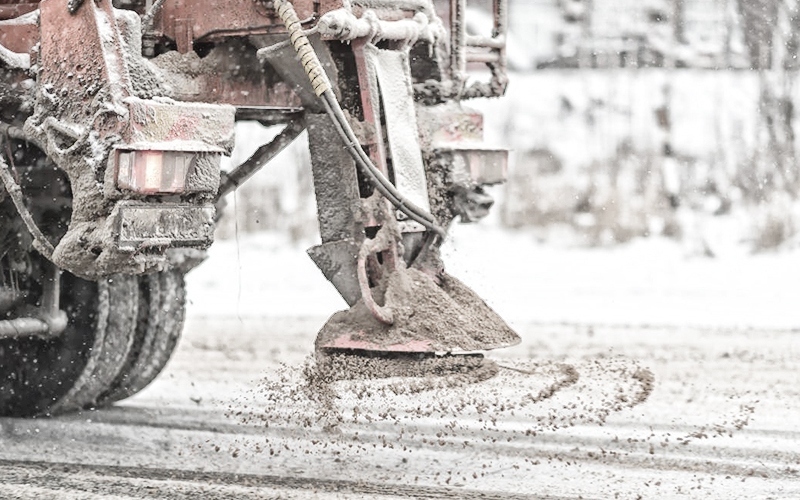
The persistently cold temps don’t help much either. Road salt is most effective at temps above 13 degrees and even if salt were plentiful this year, it still has to be mixed with sand at an appropriate level to provide traction. Charlie Goodman, III, Waitsfield’s road commissioner, said his understanding is that salt deliveries are being impacted by a shortage of delivery drivers.
“We don’t have the abundance of salt that we’re accustomed to having and it’s taking longer to be delivered,” Goodman said.
The work around, he said, is for road crews to adjust the ratio of sand to salt they are spreading, which is something that the two lengthy sub-zero cold spells would require anyway.
“We do a mixture of sand and salt together. We need the action of the salt to make the sand stick to the road, we need salt to give it a little something to stick to and then we need some sunshine to warm it up and melt ice,” Goodman said.
Warren’s road crew manager Andrew Bombard said Warren has been facing similar issues, compounded by limited storage space for salt. He said his understanding of the salt shortage is that there are supply chain issues getting the product to Vermont’s primary distributors.
And in Fayston, town clerk Madison Vasseur reached out to town residents via listserve to remind them of the current salt shortage and ask for people to be patient.
“With limited salt available, some roads may be slicker than usual during and after winter weather. Our crews will continue to do the best they can with the materials available,” she wrote.
“Road conditions may be different than usual, so please drive with caution – and a friendly reminder to avoid parking in plow routes,” Vasseur added.